The field of artificial intelligence (AI) is quickly changing the face of industries worldwide, and graphic design is no exception. AI tools are becoming more powerful and accessible, able to produce logos and edit pictures in seconds, and to design entire layouts in a few seconds. This leads to a significant question: Will AI supplant graphic designers?
Although AI is definitely transforming the design industry, the solution is not as simple as a yes-or-no answer; instead, AI is altering designers’ roles, processes, and required skill levels. This transformation should be understood by all individuals in the field of graphic design or anyone who is venturing into the field.
How Will AI Affect Graphic Design Jobs?
The use of AI is profoundly reshaping the way graphic design is done, yet it is not replacing designers. Rather, it is redefining the essence of design jobs by automating routine tasks and boosting the creative processes.
Now AI applications can be used to complete tasks like creating layouts, resizing images, removing backgrounds, and even creating logos. The capabilities enable designers to finish the projects quicker and concentrate on more advanced creative choices.
This leads to increased productivity and reduced turnaround times. Nevertheless, this change also implies that designers have to make some adjustments.
The trend is towards professionals able to:
- Work alongside AI tools
- Refine AI-generated outputs
- Apply strategic and creative thinking
Instead of replacing jobs, AI is opening new avenues in fields such as AI-assisted design, prompt-based design workflows, and the creative direction of AI-generated content.
AI Capabilities and Limitations in Graphic Design
AI has brought some strong features that are changing the process of design, yet there are limitations that point at the significance of human intervention.
AI Capabilities in Graphic Design
AI tools are fast and efficient at creating visual content, and the designer can take a concept to execution much quicker than conventional techniques.
Some key capabilities include:
- Generating logos, ads, and infographics
- Automating image editing and retouching
- Creating design layouts instantly
- Applying styles and effects automatically
These capabilities help streamline workflows and reduce the time spent on repetitive tasks, allowing designers to focus on creativity and strategy.
Limitations of AI in Design
Despite its strengths, AI has several limitations that prevent it from fully replacing human designers.
AI outputs depend heavily on training data. If the data is biased or incomplete, the results may lack originality or accuracy.
Additionally, AI struggles with:
- Understanding brand identity deeply
- Interpreting cultural and emotional context
- Making strategic creative decisions
Human designers bring critical thinking, intuition, and emotional intelligence—qualities that AI cannot replicate effectively.
Can AI Replicate Creativity?
Creativity is one of the most debated aspects when discussing AI in graphic design. While AI can generate visually appealing designs, it does not possess true creativity in the human sense.
AI works by analyzing patterns and generating outputs based on data. It can mimic styles, combine elements, and produce impressive visuals, but it lacks:
- Emotional understanding
- Personal experience
- Cultural awareness
Human designers, on the other hand, bring originality, storytelling, and meaning to their work. They can interpret a brand’s vision, connect with audiences, and create designs that evoke emotions. AI can assist in the creative process, but true creativity remains a human strength.
Collaboration Between AI and Designers
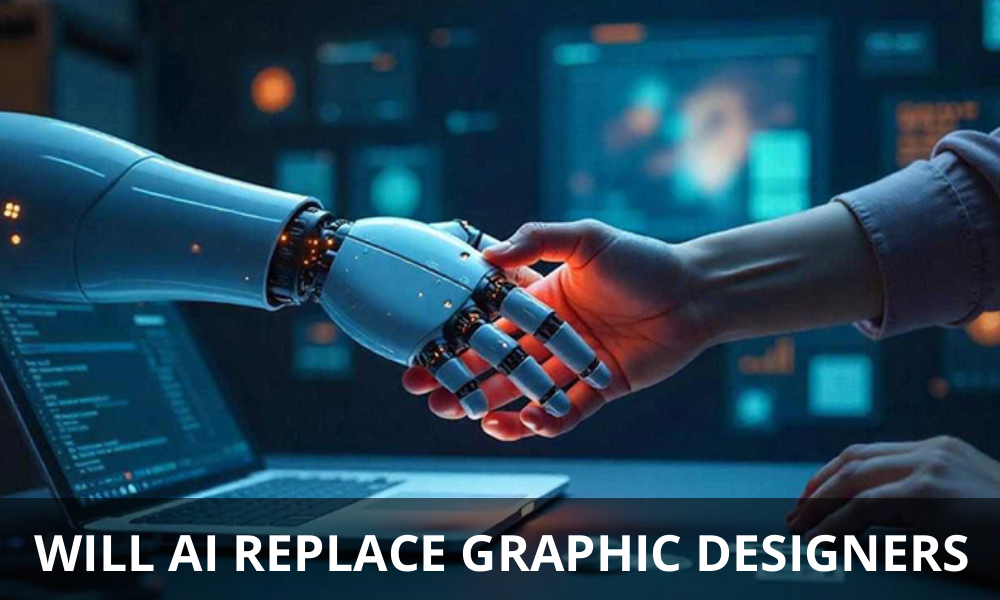
The future of graphic design lies in collaboration between humans and AI rather than competition.
AI as a Supportive Tool
AI acts as a powerful assistant that enhances productivity and efficiency. Designers can use AI to:
- Generate initial design concepts quickly
- Edit and refine images in seconds
- Automate repetitive tasks
This allows designers to spend more time on strategic and creative aspects of their work.
Benefits of a Hybrid Approach
Combining AI capabilities with human creativity leads to better results. Designers can use AI-generated outputs as inspiration and refine them to align with brand identity and audience needs.
This hybrid approach:
- Speeds up workflows
- Improves efficiency
- Enhances creative possibilities
It represents the future of design, where technology and human creativity work together seamlessly.
Evolving Skill Sets for Graphic Designers
As AI becomes more integrated into design workflows, the skills required for graphic designers are evolving.
Traditional Skills Still Matter
Core design skills such as typography, color theory, composition, and visual storytelling remain essential. These fundamentals provide the foundation for creating high-quality designs.
New AI-Driven Skills
Designers now need to develop skills in:
- Prompt engineering for design tools
- AI tool usage (e.g., generative design platforms)
- Editing and refining AI outputs
These skills enable designers to leverage AI effectively and stay competitive in the industry.
Essential Tools for Modern Graphic Designers
Modern designers are expected to work with both traditional and AI-powered tools. Some commonly used tools include:
- Figma
- Adobe Firefly
- Canva
- InVision
- Framer
These tools help designers create, collaborate, and iterate more efficiently.
Traditional vs AI-Enhanced Design Workflow:
| Aspect | Traditional Design | AI-Enhanced Design |
| Time Required | Longer manual process | Faster automated workflows |
| Creativity | Fully human-driven | Human + AI collaboration |
| Efficiency | Moderate | High |
| Output Iterations | Limited | Multiple rapid variations |
Importance of Continuous Learning
To stay relevant in the evolving design landscape, continuous learning is essential.
Designers should:
- Stay updated with AI trends
- Learn new tools and technologies
- Experiment with AI-driven workflows
By doing so, they can expand their capabilities and explore new career opportunities.
Industry Trends in AI and Graphic Design
AI adoption is growing rapidly across industries, and graphic design is no exception.
Current Trends
- Increased use of AI in design workflows
- Faster content creation for marketing
- Growing demand for AI-skilled designers
Future Outlook
The demand for graphic designers is expected to continue, but roles will evolve. Designers who embrace AI will have a competitive advantage and access to new opportunities.
AI will likely:
- Enhance productivity
- Enable more creative experimentation
- Create new job roles
Ethical Implications of AI in Design
AI-generated designs raise important ethical and legal concerns.
Copyright Issues
Ownership of AI-generated content remains an open question. The rights are not clear and the rights holder remains unknown to the creator, the AI model, or the owner of the dataset.
Authenticity and Originality
With the increase in AI-generated content, it is difficult to tell the difference between human-made and AI-generated design.
Responsible Use
One of the ways in which designers can make sure that AI is used ethically is by honors the intellectual property and upholding originality in the work.
Conclusion
AI is revolutionizing the graphic design sector, yet it does not take over designers. Rather, it is transforming the way design work is conducted, generating new opportunities and revising requirements of skills.
The future of designers is to be able to integrate creativity with technology, to apply AI as a tool to complement their work, not to take its place. Graphic designers will be able to survive this changing environment by adopting AI and constantly acquiring new skills.
FAQs
Will AI completely replace graphic designers?
It is not likely that AI will fully substitute graphic designers since it does not have the capabilities of human creativity, emotional awareness, and strategic thinking. Although AI can automate repetitive processes and generate design elements, human designers are needed to interpret brand identity, understand audience needs, and create meaningful visual communication.
What role will graphic designers play in the future?
Graphic designers will draw more attention to the creative direction, strategy, and editing AI-generated outputs. They will change their job description to involve the use of AI tools, to direct design decisions, and to ensure that products comply with brand objectives and meet audience expectations.
Is AI a threat or an opportunity for designers?
AI is a more of an opportunity than a threat. It enables designers to be more productive, have more projects, and experiment with new creative opportunities. Individuals who embrace and learn to use AI tools will be able to advance their careers.
What skills should designers learn in the AI era?
They need to focus on the old design competencies and the emerging AI competencies, such as prompt engineering, the use of AI tools, and creative strategy. All these skills are bound to guarantee success in the changing industry in the long run.
Can beginners start a career in graphic design with AI tools?
Yes, AI tools enable novices to initiate a graphic design learning process as they simplify the complex processes. Nonetheless, knowledge of design principles and creation of creative thinking are critical in establishing a successful career.